yo,
its 2026 and im back to post about another new module. this time its a module that produces sound rather than altering it, which makes it the first one of those i've blogged about here since i made the vco back when i was still posting about the synth on cohost1. its a new sound... for a new year2.....
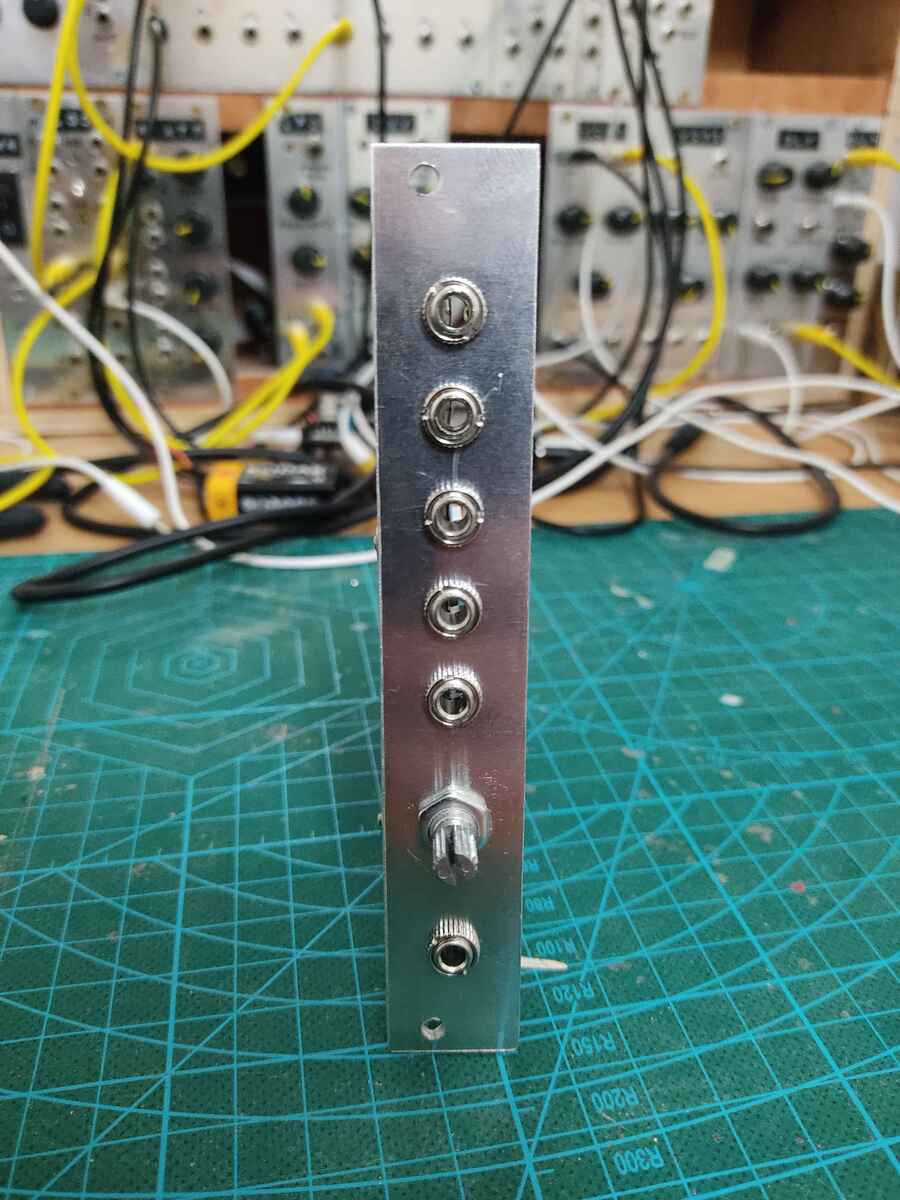
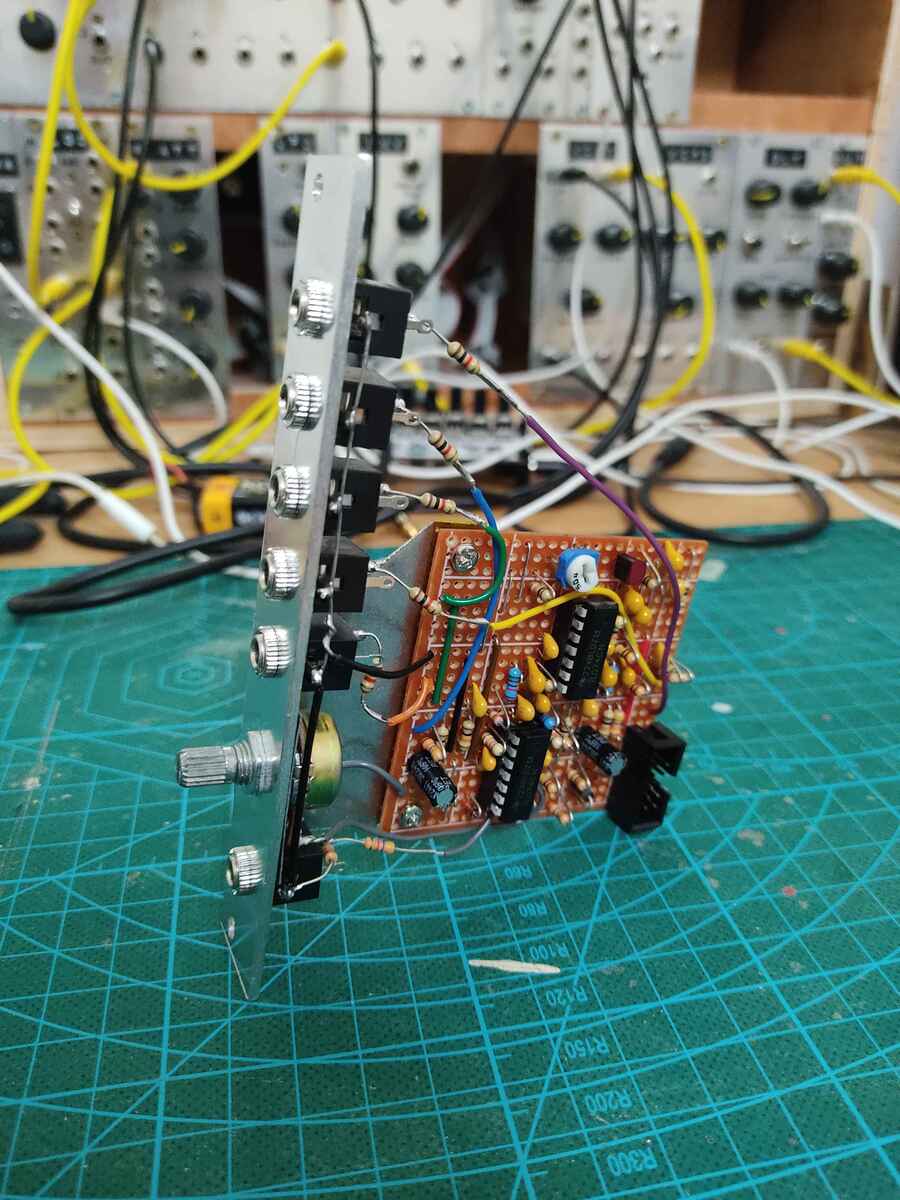
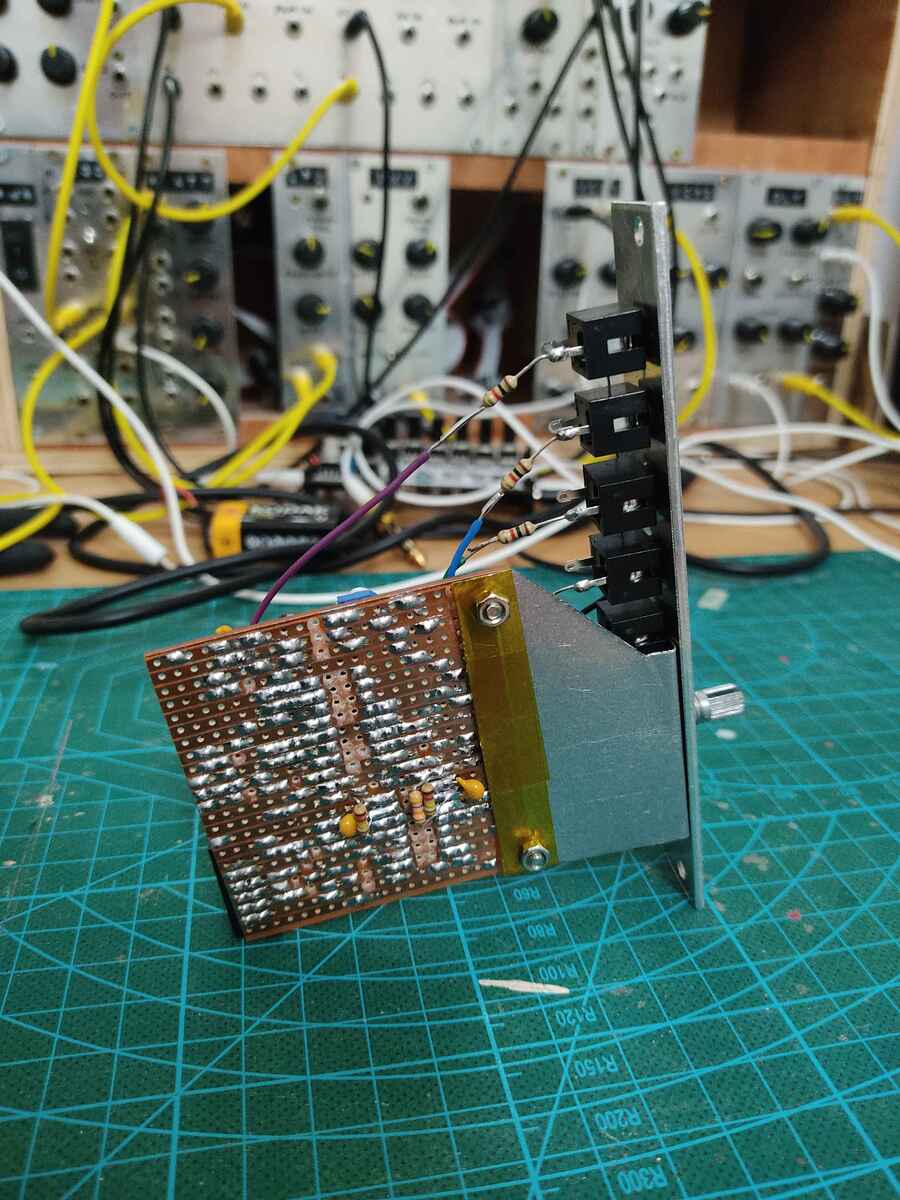
this one is a noise generator with 5 different colours of noise: white, blue, pink, violet and red/"brownian". it also includes adjustable "grainy" noise as a bonus, although admittedly i'm not sure what i'll use that for yet? i just wanted at least one panel mount pot in the circuit so i'd have something to fasten the mounting bracket for the circuit board onto. overall im mostly happy with it, other than a few very stupid design mistakes i made cos life got crazy busy for a few weeks with xmas & etc going on in the middle of me working on it. by the time the circuit got to looking almost done i started jumping the gun repeatedly, which made those mistakes a pain to correct too.... this module has truly been a fucking ordeal.
unfortunately, and i guess maybe obviously, this has meant i havent really felt like blogging about the module either. at this point i've been stalling off it for most of a month and what ur reading now is like, at least my third attempt at writing something coherent about it. so to make things easier for myself i'm breaking it down into sections. lets go....
white noise
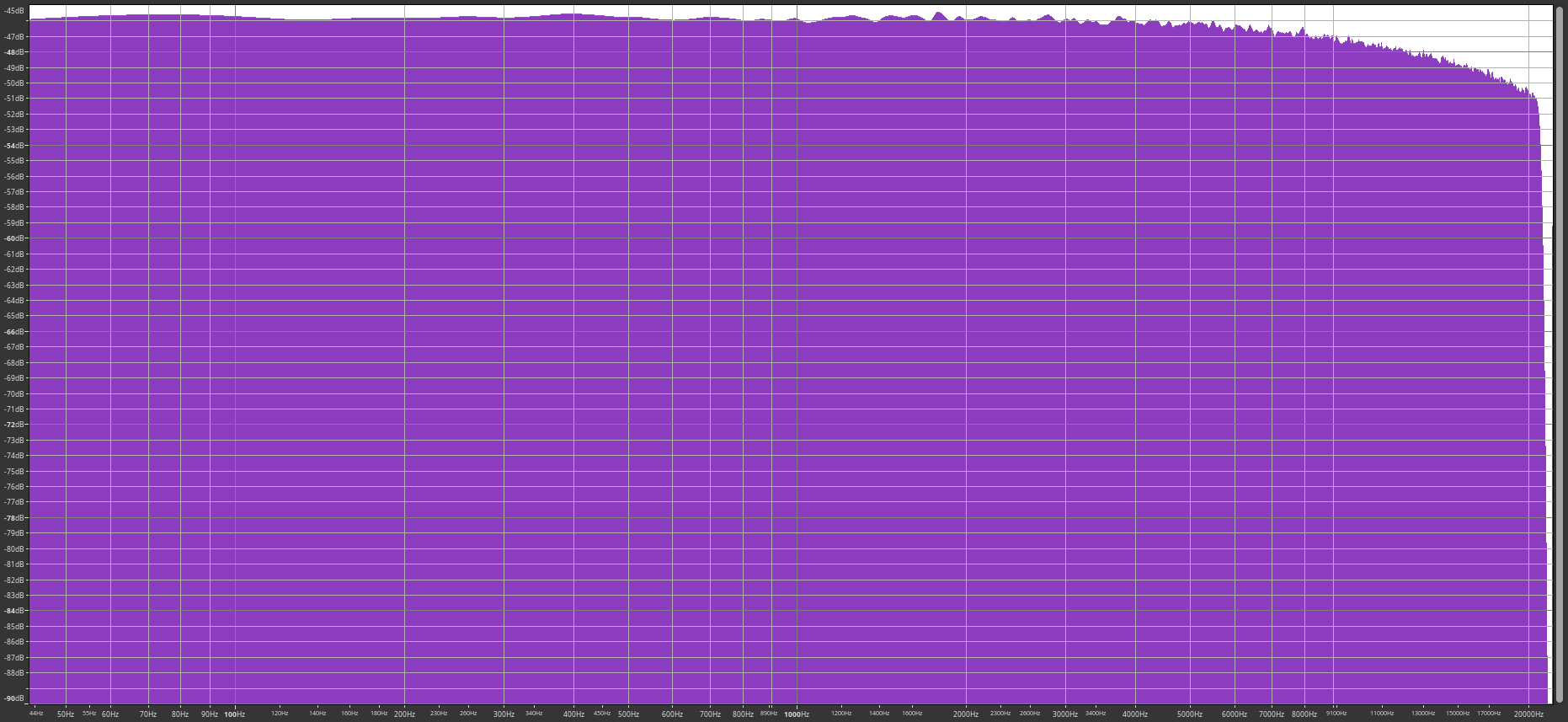
the core of the module is a transistor-based white noise generator, the kind where you abuse the transistor by cutting one of its legs off and driving current through it the wrong way until it screams in static. the original inspiration for this module was, as is often the case for me, a moritz klein video, the one about building a three colour noise generator, and as such i'd originally built it more or less exactly how it is in the video. but when i started testing transistors to find one that could generate noise with a good frequency distribution, i found that none of the bc547s i tried gave a particularly flat output, and were rolling off hard at around 2khz3. i switched to testing my stock of bc337s that i barely ever actually use and every single one gave a mostly flat output, but they were all very quiet. so instead i took a look at the mfos noise cornucopia and started borrowing parts from its noise generation/amplification section to boost the noise up to a usable level.
in the end i'd added so much that i ended up basically just building it as it is in the mfos schematic. i did change a lot of component values though as i found that the values the noise cornucopia uses were causing the noise to taper off too much in the high end. i'm not really sure why but i'm guessing maybe its due to my using a bc337 instead of a 2n3904? i'm not about to buy a different transistor just to torture it though, especially given 2n3904s and their ilk seem to be kinda uncommon and hence more pricey this side of the atlantic!!
blue and pink noise
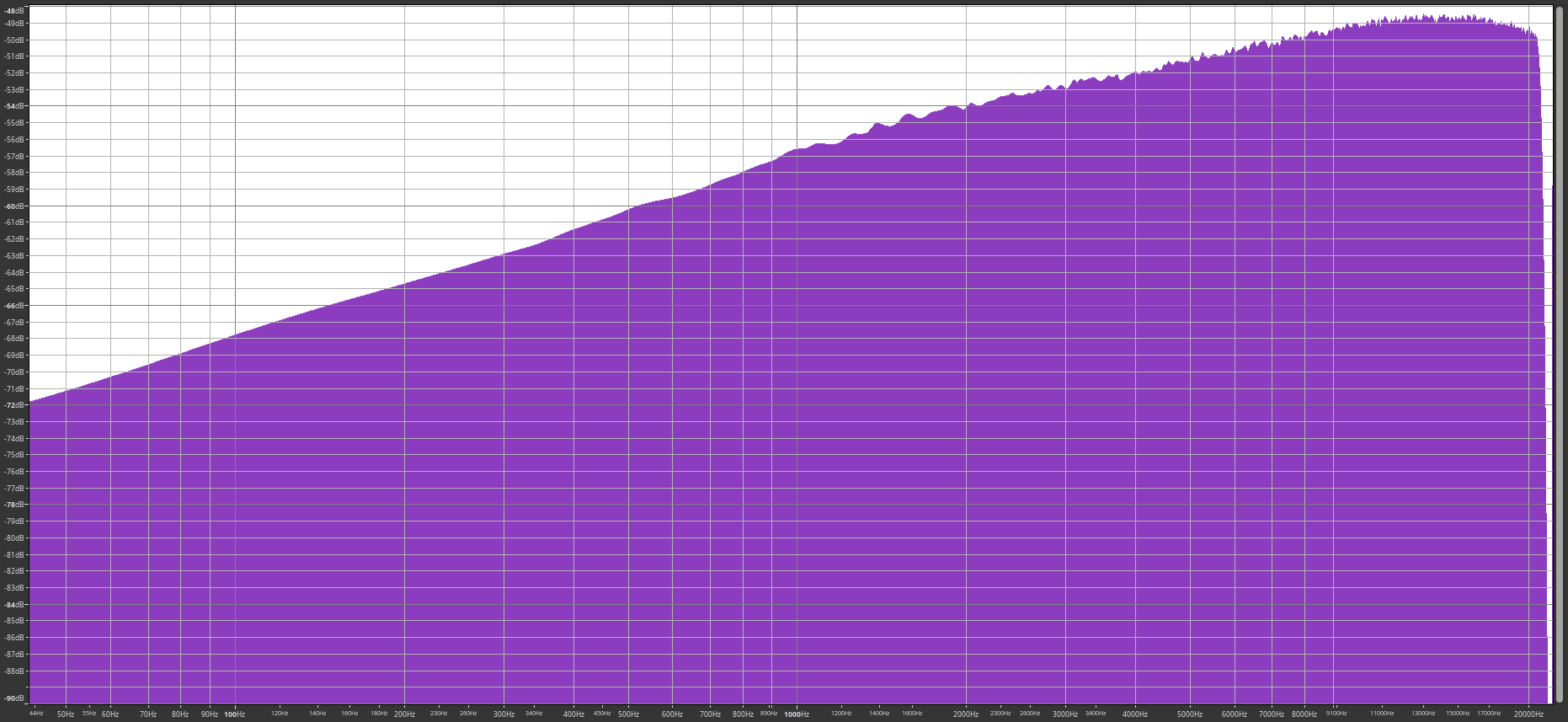
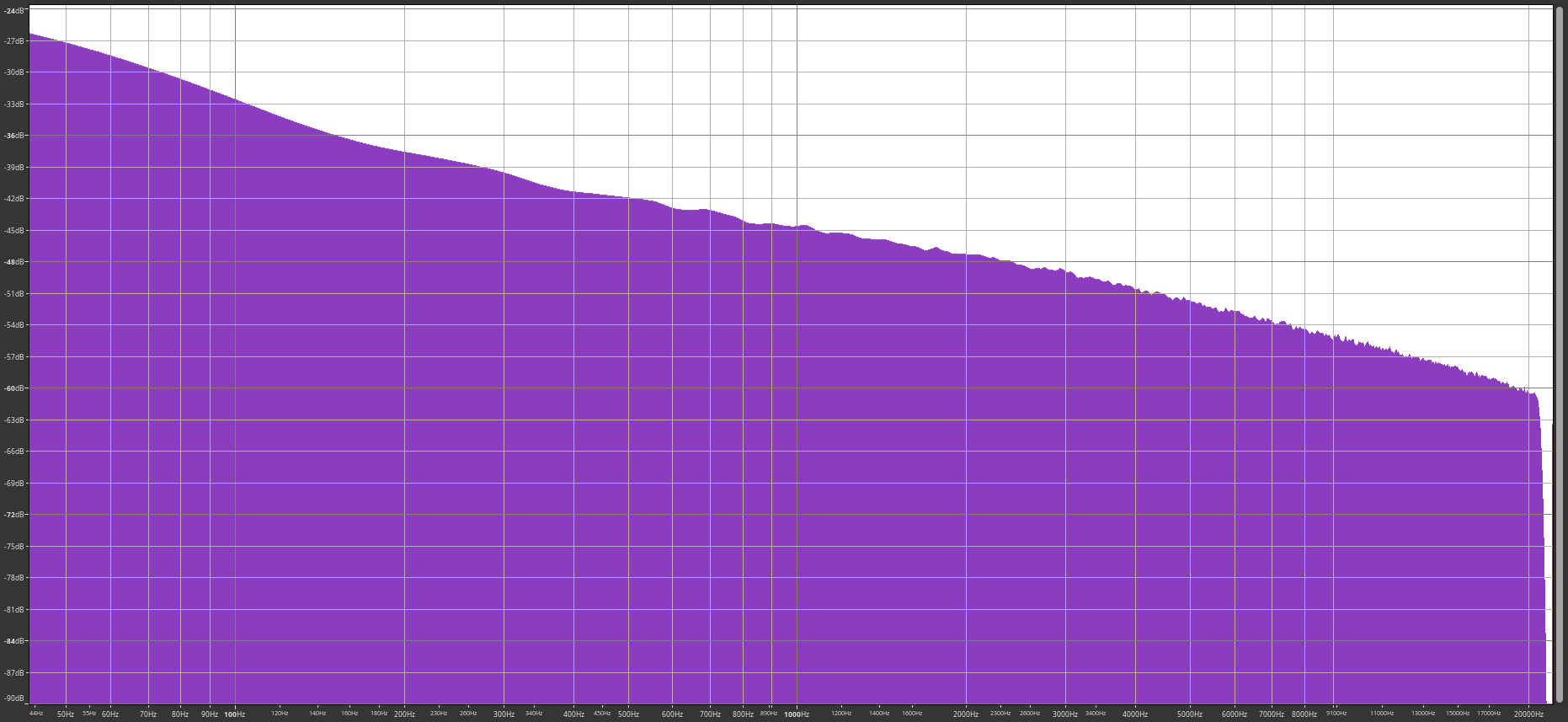
for the pink and blue noise filters i again started with the designs in the video, which each use 3 filters (low shelf and "volume limited high pass"(?), respectively) to approximate a 3db/oct filter, but when i tried them in a circuit simulator i found that the frequency distributions of the outputs were.... not really as accurate to the respective coloured noise definitions as i'd have liked. i did a lot of digging for more accurate filter designs and found this really solid one for pink noise by justin silver (which in turn is based on this article by rod elliott), so i pretty much just built that4. but for blue noise most of the designs i found were actually just mislabeled violet noise circuits, so eventually i just said fuck it and spent several days tweaking the values of the design in the vid until they gave me something i was happier with
in retrospect, i should've built the blue noise filter as a set of active high shelf filters instead of passive ones, since then i could've just copied the resistor and capacitor values from the pink noise circuit to home in on a good approximation of a 3db/oct high pass much faster. but since i'm kind of a knucklehead, i somehow didn't even realise active high shelf filters were a thing at the time even though i'd already recognised the pink noise filter as a set of active low shelves. it just didn't occur to me until i was troubleshooting the built module and saw the section on active shelving filters in this electrosmash article. whoops!
violet and red/"brownian" noise
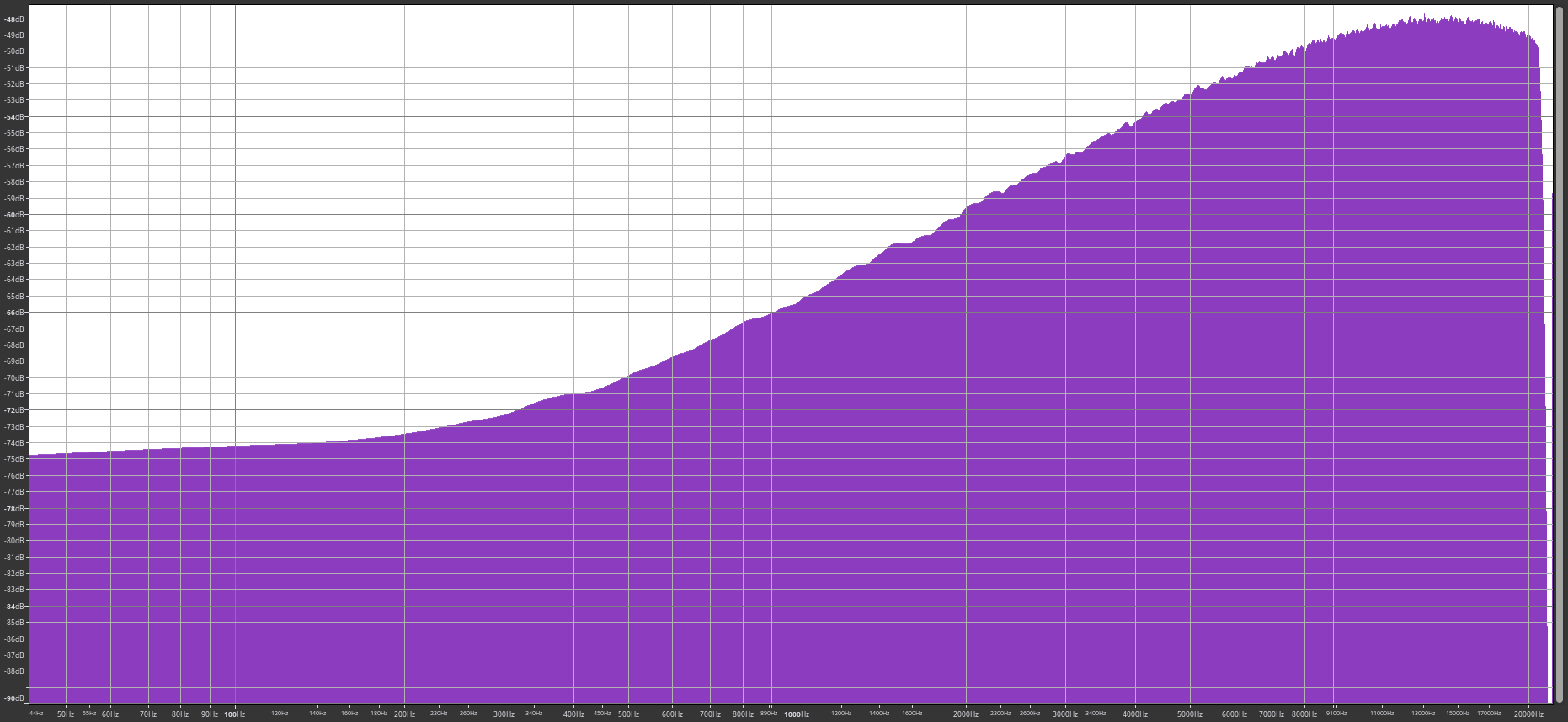
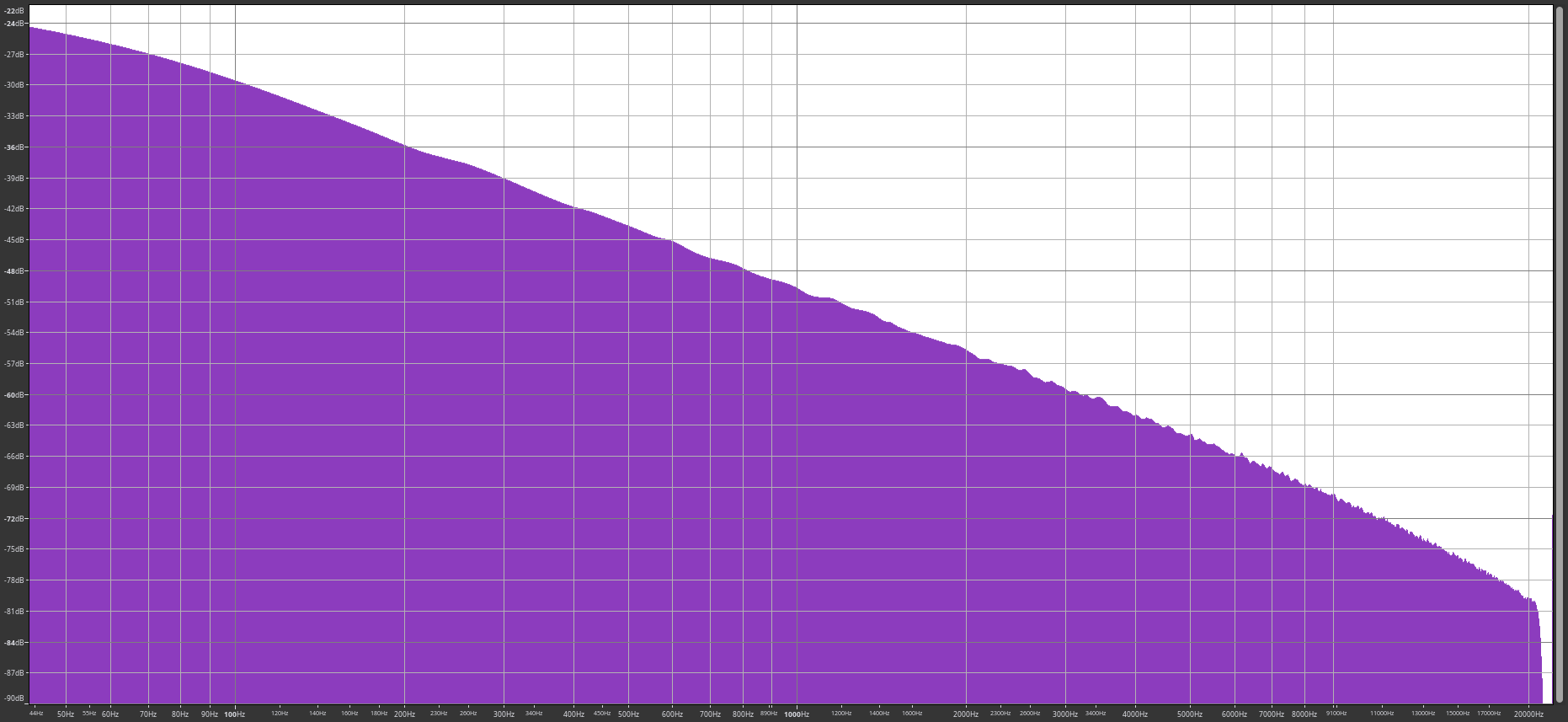
having a module with only 35 outputs felt like a waste of panel space, so i started looking into what other colours of noise would be easy to add, eventually settling on just red/brownian (fairly common) and violet (surprisingly uncommon?6). since these are just regular 6db/oct filters i figured i could just take the blue/pink noise filters and strip out the extra bits, which worked fine in the simulator and initially appeared to work on the breadboard prototype too. but once i finally built the thing, i started seeing a different picture. or hearing a different sound?? the output from the red/brownian noise was basically perfect, but the frequency distribution of the violet noise output looked almost like a high shelf, and i had no clue why
after several days of driving myself insane over the mystery of the dogshit violet noise filter, im now fairly certain that the problem (or, most of the problem) was actually not with the filter itself, but with the amplification step it goes through afterwards. since i wasn't applying any kind of low pass to rein in high frequency noise outside the audible range, the op amp was being hit with much higher frequencies of noise than necessary and was (for reasons i don't really understand7) manifesting its discontent in the form of low frequency noise. it turned out i'd missed this entirely while prototyping it because in my haste to get the module done with i'd accidentally built the violet noise circuit wrong on the breadboard and taken the output from before the amplification step instead of after it, so ultimately it was my own stupid mistake that put me through the brain crusher, and i was pretty pissed off about it.
adding a couple caps to form active low pass filters on the inverting amplifiers for the white, blue and violet noise circuits which cut out frequencies above the audible range helped a lot, but the end result of all this is still a pretty substandard violet noise output. the low frequency behaviour is much closer to what i'd expected, but i think low frequency noise is still bleeding in from elsewhere, and i suspect i was a little overzealous in how close the extra low pass filters come to the upper audible range as the high end rolls off a couple db harder than it did before adding them. unfortunately since less high frequency noise = less low frequency noise here i'm stuck performing this balancing act, but at least it's audibly closer to real violet noise now even if the spectrum still looks like garbage.
as with the blue noise filter i think an active filter would've been a better choice here. i tried it on the breadboard while troubleshooting the built module and it did seem to give a much cleaner frequency distribution, but switching to that design would've required a total rebuild of the stripboard circuit, which i really did not want to do at the time and don't much feel like doing right now either. keep an eye out for the eventual "mersenne rainbow v2" for a fixed version i guess, but don't expect it to happen any time soon lmao
grainy noise

this is... pretty much identical to the grainy noise circuit from the mfos noise cornucopia linked above. i did tweak the values a bit to reduce the range of the graininess pot cos with the original values the transition between "grainy" and "full on torrential downpour" was way faster than it seemed like it should be? but other than that its basically identical so there's not much to say on it other than that the pot is doing a very good job holding the circuit bracket in place ;3
aaaaaaaaand thats all i got for this one. the synth page is updated as always, as is the repo if u want the circuit designs so u can build one, although i'd strongly advise redesigning the blue and violet filters if u do. the next module will almost certainly be a sample & hold; it took me so long to get this post written that i've already got the circuit planned out in my head, but i do wanna at least attempt to get a better understanding of how a jfet works first8 and i need to order some weird rectangular caps as well so. it could still be a while. hopefully it doesn't almost break me like this module did!!
see u in the next,
– freya
-
rip little purple dude i miss u every fuckin day ;_;7 ↩
-
ok like full disclosure i finished this in the first week of january but it was such an ordeal that this post took most of a month to write and now none of the new year jokes make sense. im not changing them tho. my blog my rules. ↩
-
actually 1 of them did give a fairly flat output but it was also even quieter than the bc337s so.... ↩
-
i tweaked the values slightly here too, but this time it was just to avoid having to buy component values i didn't already have lmao ↩
-
with grainy noise it'd be 4 but i hadn't decided to add that yet, ↩
-
or, it's uncommon that they're actually correctly labelled as violet noise and not as blue noise. i don't really get why there's so many designs that do this :/ ↩
-
i have my hunches but i don't wanna risk spreading misinfo by posting em here. i dont know shit about fuck my guy! ↩
-
for some reason i'd assumed they were like, the transistor equivalent of a relay? theyre absolutely not. transistors continue to escape me..... ↩